Slowly but surely this blog is becoming the “Quack Data” reference I feel. Here’s another situation to where with current data sharing and aggregation to where we  have yet another case of “discrimination by the algorithms” for the 99% group and of course I’m right in there with everyone else. When will people starting paying attention here as to what is going on with flawed data?
We all want transparency but do we want “flawed” transparency? The odds are pretty good today that with compiling profiles with “free taxpayer data” that is out there along with data silos of other information that you will find errors in your file, again it depends on the sources and what algorithms are being run.
This article goes on to say that criminal records to that are supposed to be purged are not and still all kinds of other information makes it on the web too with vital social security numbers, birth dates and so on. The problem: Data is not being purged as needed and updates are not done.
People are being denied jobs and places to live due to flawed data as it’s not accurate. Like I said in another “Attack” chapter, part 6 the middle and lower class here are going to be nothing but “data chasers” pretty soon with correcting flawed data. As a consumer you can’t touch, see or feel these algorithms running on servers 24/7 making life impacting decisions about you. Sure the credit folks will let you see things after the fact and then comes the big chase for the consumer to fix everything on their reports that is wrong about it. Hey last I looked we all have jobs to work too and then we have to find time to fit this in.
In healthcare this has already been going on to a degree with insurers and you can  read more about part 4 and how that occurs here. You have old agencies like the MIB that can’t get their records fixed to be accurate and some people are denied coverage because of that fact.
Just wait until this kicks in, CoreLogic has formed a partnership with FICO who is already in the process of selling algorithms with mismatched data which connects public information about you and combines it with your credit score to tell if you as a medical patient will take your prescriptions. Somebody needs to start calling some of these folks on “mis  matched data” the discriminates as now we have “Discrimination by the Algorithm” and it’s showing in more places all the time. Last time I wrote about the FICO mismatched data it all ended up over at the Daily Kos via another publisher as an awareness. As far as I am concerned the FIOC Medication Adherence Scoring is nothing but mismatched data analytics created to sell software and is the work of some “underground” think tanks on how to generate more money and profits. You can find my comments too on the Daily Kos on this as another author included them in her column who was in total agreement. Do you know how common flaws are? Look at this link and see about the 31k that are “living” but Social Security says they are dead.
I got started on this topic a couple years ago when I found my former doctor, who had been dead for 8 years still listed as alive and well on Healthgrades and still taking new patients, so again “flawed data”.
When I get time I have checked out a few of the other sites and find more dead  doctors, doctors on staff at hospitals where they have set foot, and retired doctors. Actually this post got a visit from the AMA with a nice interview on the topic at the link below. Now the AMA sells some data too along the line here relative to doctors and prescriptions.
The way office workers are trained today and part of this has just grown over the years when looking at computer screens is that when you see a blemish on a report, oh my gosh, whistles and bells go off, this person is not perfect! I have news for all of you, there will no perfect people by the time data is sold by corporations who collect this from the web. It’s a big business and pharmacies I swear today only fill prescriptions so they can collect and mine more data about us.
The more some of this data get aggregated and analyzed, bingo we have the basis to sell more analytics software. Now there’s good software out there that does a good job and makes us smarter, but I’m not talking about the good stuff, I’m talking about the bad algos, and actually follow @badalgo on Twitter, he puts some good stuff out there with some images on the algos on the stock exchanges, good educational stuff.
How do we as consumers fight back, start licensing and taxing these folks and have a federal government page of disclosure, what is sold, and to  who, and how much are the profits on the sale of this data. I’m smart enough to know that you can’t create laws to govern how to write algorithms and code but we can sure go for plan B. Someone needs to enlighten our digital illiterate Congress about this. Read the article at the red link below and think about that excise tax you pay to put a new tire on your car and this will make sense!
The mining of data is so bad that 3 states, according to this article had to fight back with more software that blocks automated data mining programs!! They were not doing it to protect us, but their websites were inundated with mining software coming in for the “free taxpayer data”. It gets worse too as some states were selling the data and then charged for updates to the data for new information that was added and the data miners wouldn’t pay a few hundred bucks to update and keep sending out even more “flawed data”.
Up above I wrote about CoreLogic and their new partnership with FICO and their data integrity and wouldn’t you know that North Carolina revoked their license to get information from the public records! That tells you what kind of crap is being aggregated and abused as the folks were not only making tons of money selling the data but they were too damn cheap to pay for an update, kudos to the state.
Gee what kind of company is CoreLogic that is too cheap to pay for an update and what are they going to do with FICO? Inquiring minds want to  know and want it disclosed publicly. They always come back with “its’ not our fault but rather the data we pull from is not updated. I heard that with HealthGrades and just recently in the news, guess what, HealthGrades merged with a “marketing” company so I think the data may not be doing so good selling itself with accuracy, so let’s get marketing in here and see how we can whoop it up a bit and get consumers to still buy in,even though we know there are flaws, we just want money when we sell this data. You can read in the AMA interview link above about the blame shifting for flawed data with Healthgrades, “it’s not our fault”…right!
I believe in good data, for finding cures for diseases and better treatments and so forth but not the BS environment that is evolving as people cannot live their lives with constantly having to correct information about themselves that is in error. Data mining is making this so very complex and again, license and tax them and “read” that link above as it makes sense and will slow some of this “diseased data mining” down to a reasonable rate and knock out the algorithms designed strictly for profit and desire. We want accuracy and not stupidity and insanity.
About 2 years ago I did an interview with Proto with an outside journalist about algorithms in healthcare which did not make it to the press as she and both knew 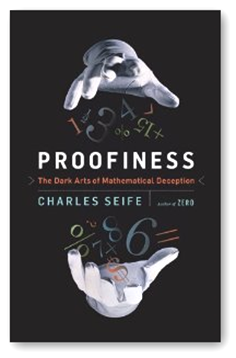 we were ahead of our time and the public was not ready for this, but we talked about algorithms created for “desired” results and those for “accuracy” and how they are not always the same. I do a few others out there I communicate with that are far smarter than me that also make this case too. Read this book and learn up. We have a lot going on sadly with the “dark side”. I have had people on Twitter tweet me and thank me for this reference too, it opened their eyes.
Or you can listen to a radio cast at this link below, goods stuff that talks about how naïve and gullible we are and how big corporation pull the wool over our eyes. Math is no longer a 100% methodology to prove accuracy once some creative algorithms are spun.
The big culprits of flawed data are the companies that compile this information so be wary of what you put out there as well as what can appear via public records and check for accuracy. I guess breaches someday might come in handy to fix the data <grin>.
It’s the old blame game out there with flawed data and digital illiterates don’t know how to work with it and scarier yet employees are not trained on how to work with levels of inaccuracies either and made some bad decisions. Look no further than the Hill for digital illiterates for that matter. Read this one paragraph from the article, it spells it out, a faulty algorithm the state of Wisconsin uses kept this man from getting a job.
“Teague sued Wisconsin's Department of Justice, which furnished the data and  prepared the report. He blamed a faulty algorithm that the state uses to match people to crimes in its electronic database of criminal records. The state says it was appropriate to include the cousin's record, because that kind of information is useful to employers the same way it is useful to law enforcement.”
This mis use of data and selling it all over is starting to turn normally peaceful folks into those who are not so peaceful. In healthcare they just put the doctors medical claim information out there for digital illiterates to work with and it is flawed to the hilt! I guess HHS was worried about the Dow Jones lawsuit filed against them for not putting it out there. Sometimes people get on a rant and want stuff just because it’s there and that may not always be the best rule of thumb as is with claim data. Hey I have an idea, let’ aggregate this flawed claim data with some other data base and see what we get? Do you get the picture and let’s add in some machine learning and we will be back to the case above in Wisconsin with faulty algorithms that humans don’t even control.
Back on track here, one woman in this story had to get by on temporary jobs, all she could get due to the “flawed data” in her background check…is this fair! No!!
THIS IS TRULY THE ATTACK OF THE KILLER ALGORITHMS ON THE MIDDLE CLASS IN THE US TODAY AND WHY THE OCCUPY MOVES EXIST. IT’S A TOUGH BATTLE AS IT’S ALL SPUN MATH AND FLAWED DATA TO FIGHT AGAINST WHILE CORPORATE AMERICA REAMS IN BIGGER PROFITS THAN EVER. THE MATH DOES IT FOR THEM. 
One more quote from the article…she said dinosaurs but we know it’s the algorithms behind the scenes and to quote Kevin Slavin, they have teeth”. BD
"It's like Jurassic Park. They come at you from all angles, and God knows what's going to jump out of a tree at you or attack you from the front or from the side," she says. "This could rear its ugly head again — and what am I going to do then?"
Out of work two years, her unemployment benefits exhausted, in danger of losing her apartment, Casey applied for a job in the pharmacy of a Boston drugstore. She was offered $11 an hour. All she had to do was pass a background check.
It turned up a 14-count criminal indictment. Kathleen Casey had been charged with larceny in a scam against an elderly man and woman that involved forged checks and fake credit cards.
There was one technicality: The company that ran the background check, First Advantage, had the wrong woman. The rap sheet belonged to Kathleen A. Casey, who lived in another town nearby and was 18 years younger.
Kathleen Ann Casey, would-be pharmacy technician, was clean.
"It knocked my legs out from under me," she says.
The business of background checks is booming. Employers spend at least $2 billion a year to look into the pasts of their prospective employees. They want to make sure they're not hiring a thief, or worse.
But it is a system weakened by the conversion to digital files and compromised by the welter of private companies that profit by amassing public records and selling them to employers. These flaws have devastating consequences.
http://news.yahoo.com/ap-impact-criminal-past-isnt-yours-182335856.html
Technorati Tags:
Proofiness,
algoirthms,
mathmatics,
healthcare,
desired results,
rogue algorithm,
Occupy New York,
politics,
math,
ditigal literacy,
Congress,
credit,
Michael Moore,
health insurance,
jobs,
economy,
CoreLogic couples who were serious about the donation would ask that question, but you never know today. The FDA says the test must be within 7 days of the “giving” day.





 now with ICD10 coding coming up. For quick research and clinical information this could work ok but there is questionable information today too in some of the medical journals and the article states journals will be included here as well. Hopefully I think we have more credible data in journals rather than the opposite. More so than Cedars I still think our Congress needs this capability to gather and sort information to make laws. The US is the only country that ties ICD codes to billing so our Health IT issues are much more complicated than other countries.

 research. Some states have even put governors in their software to block the automated data mining services on the web. With machine learning we always run some risk of “rogue algorithms” too, happens all the time on the stock market so again something to be aware of with writing the unreadable with data base upon data base now aggregated and joined at the hip to ensure “accurate” data is in fact contained.

 have yet another case of “discrimination by the algorithms” for the 99% group and of course I’m right in there with everyone else. When will people starting paying attention here as to what is going on with flawed data?
 read more about part 4 and how that occurs here. You have old agencies like the MIB that can’t get their records fixed to be accurate and some people are denied coverage because of that fact.
 matched data” the discriminates as now we have “Discrimination by the Algorithm” and it’s showing in more places all the time. Last time I wrote about the FICO mismatched data it all ended up over at the Daily Kos via another publisher as an awareness. As far as I am concerned the FIOC Medication Adherence Scoring is nothing but mismatched data analytics created to sell software and is the work of some “underground” think tanks on how to generate more money and profits. You can find my comments too on the Daily Kos on this as another author included them in her column who was in total agreement. Do you know how common flaws are? Look at this link and see about the 31k that are “living” but Social Security says they are dead.
 doctors, doctors on staff at hospitals where they have set foot, and retired doctors. Actually this post got a visit from the AMA with a nice interview on the topic at the link below. Now the AMA sells some data too along the line here relative to doctors and prescriptions.
 who, and how much are the profits on the sale of this data. I’m smart enough to know that you can’t create laws to govern how to write algorithms and code but we can sure go for plan B. Someone needs to enlighten our digital illiterate Congress about this. Read the article at the red link below and think about that excise tax you pay to put a new tire on your car and this will make sense!
 know and want it disclosed publicly. They always come back with “its’ not our fault but rather the data we pull from is not updated. I heard that with HealthGrades and just recently in the news, guess what, HealthGrades merged with a “marketing” company so I think the data may not be doing so good selling itself with accuracy, so let’s get marketing in here and see how we can whoop it up a bit and get consumers to still buy in,even though we know there are flaws, we just want money when we sell this data. You can read in the AMA interview link above about the blame shifting for flawed data with Healthgrades, “it’s not our fault”…right!
 we were ahead of our time and the public was not ready for this, but we talked about algorithms created for “desired” results and those for “accuracy” and how they are not always the same. I do a few others out there I communicate with that are far smarter than me that also make this case too. Read this book and learn up. We have a lot going on sadly with the “dark side”. I have had people on Twitter tweet me and thank me for this reference too, it opened their eyes.
 prepared the report. He blamed a faulty algorithm that the state uses to match people to crimes in its electronic database of criminal records. The state says it was appropriate to include the cousin's record, because that kind of information is useful to employers the same way it is useful to law enforcement.”
